
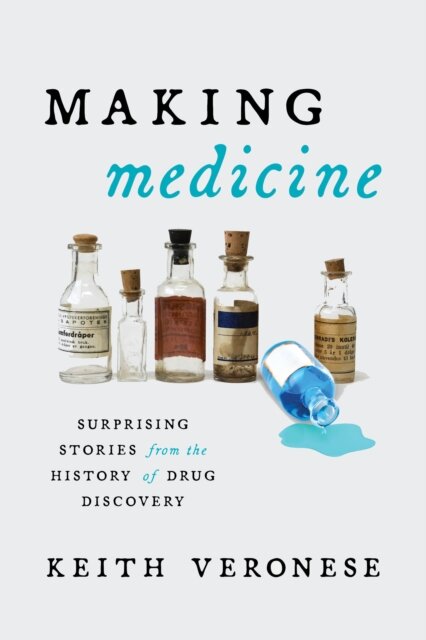
Making Medicine
€ 26,90
Informação do Produto
| ISBN | 9781633887534 |
|---|---|
| Autores | Keith Veronese |
| Editora | Prometheus Books |
| Formato | Capa dura |
| Número de páginas | 250 |
| Peso (kg) | 0,496 |
| Data de Publicação | 15/07/2022 |
| Preço (iva excl.) | € 25,38 |
| Imposto | € 1,52 |
| Preço (iva inc.) | € 26,90 |
| Disponibilidade | 3 unidades em armazém externo |
Descrição do Produto
How do scientists design the medicine we use to improve our lives? It turns out that many are happy accidents or overlooked mixtures of carbon and hydrogen that go on to not only improve the lives of people the world over, but become million- and billion-dollar makers for pharmaceutical companies.
In Making Medicine: Surprising Stories from the History of Drug Discovery, author Keith Veronese examines eighteen different molecules and their unlikely discovery –or in many cases, their second discovery –en route to becoming invaluable medications. From the famous story of Alexander Fleming’s discovery of penicillin, to lesser-known stories surrounding drugs like quinine (derived from the bark of the cinchona tree and responsible for saving the lives of millions in the fight against malaria), Veronese reveals the “how” and the “who” behind the pharmaceutical breakthroughs that continue to impact our world. With subjects including cancer-fighting therapies and over-the-counter pain relievers; hair regrowth creams and antidepressants; readers will no doubt have a personal connection to at least one molecule in this book.
Like all discoveries made by mankind, the stories behind these breakthroughs and their introduction to the world are often messy, sometimes controversial, and always human. Take digoxin, which correctly prescribed can help heart efficiency, but in higher doses can prove fatal –a fact known all too well by Charles Cullen, a nurse who used digoxin to kill over forty patients.
Making Medicine also details how modern pharmaceutical discovery works, highlighting the serendipitous nature of the discovery of these miracle molecules, along with how they do (or don''t) interact with the human body to produce the desired result.